

It can be a difficult time when your loved one dies. As executor of an estate, you need to collect the assets, pay the debts and pass on what remains to the beneficiaries in the will. However, before you are able to collect the assets, you may need to obtain probate, which is how the Supreme Court confirms that a will is valid. If more than one executor has been named, you will need to act together. We can assist you with any aspect of the work you need, from our Redcliffe or Aspley office.
If you have been named as executor and you are unsure where to start, one of our lawyers can go through the first steps with you. Call 07 3284 5093.
Executors are often surprised by the amount of work involved, even in a seemingly simple estate.
What should you do first as an executor?
The first priority is arranging the funeral. This can be done by you as executor, the next of kin or a number of people. There is no hard and fast rule in this very personal affair. If you aren’t aware of the wishes of the person who died, review the will for any directions about the arrangements. If no wishes are known, or if a dispute arises, it is the executor who has the final say. The funeral director will normally apply for the death certificate from the Registry of Births, Deaths and Marriages.
The next step is to locate the original will and protect any assets. This includes ensuring any real property is adequately insured.
Do all wills have to go through probate in Queensland?
You can finalise some Queensland estates without a grant of probate, which is the court document that confirms your authority as executor to deal with the estate. Whether you need one depends on what the person who died owned, how they owned it and the status of their tax affairs.
Many couples hold their home or bank account as joint tenants, which means they own all of it together rather than in shares. When one of them dies, the survivor becomes the sole owner without a grant of probate. For a home, the survivor still needs to apply to Titles Queensland, which keeps the official records of land ownership, to record the death on the title. For a joint bank account, the survivor provides the bank with a copy of the death certificate. When people own separate shares in a property as tenants in common, as brothers and sisters sometimes do with an investment property, the share of the person who died becomes part of the estate.
If a home was in the sole name of the person who died, you can sometimes apply to Titles Queensland to transfer it without a grant of probate.
Where the person who died left only money in one or more bank accounts, the estate may not need to obtain a grant of probate. Each bank or other financial institution sets its own value limit, and below that limit you can request the bank to release the money without a grant.
We can review the circumstances of the estate and advise you whether the estate needs a grant of probate.
What is probate?
Probate is how the Supreme Court confirms that a will is valid. Once the court accepts the will, it makes a grant of probate, the court document that confirms your authority as executor to deal with the estate.
If the will names you to carry out the wishes of the person who died, you are the executor. Their estate is made up of the assets they owned in their own name, such as their home, bank accounts and investments. The beneficiaries are the people the will names to receive it.
Estate administration is the executor’s work in carrying out the wishes of the person who died. It includes collecting the assets, paying the debts, finalising their tax and passing on what remains to the beneficiaries as set out in the will.
Do you need a lawyer to apply for probate?
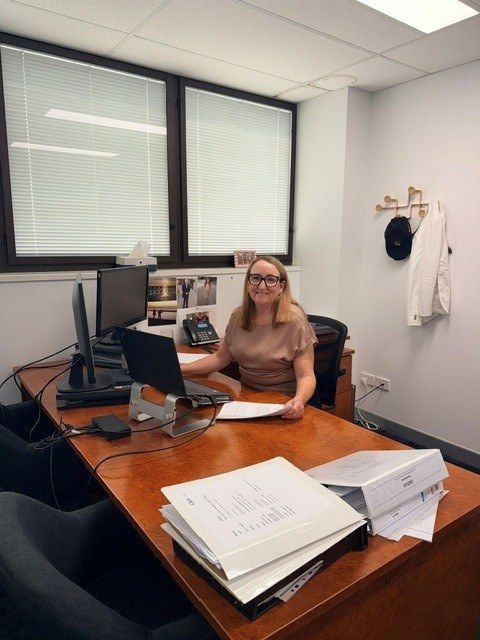
As executor, you choose whether to use a lawyer to apply for probate in Queensland. You can apply for probate yourself, in person or by post, at a Supreme Court registry in Brisbane, Cairns, Rockhampton or Townsville. A registry is the court office that receives the application.
A lawyer can prepare and file the documents, answer any request for more information from the court registry and advise you on your duties as executor, including when it is safe to distribute the estate. If you meet with us, we can set out each step for the estate you are managing, and you decide which parts you would like us to take on.
What are the steps to a grant of probate in Queensland?
The first step is to publish a notice of intention to apply for probate in the Queensland Law Reporter, a legal publication, and send a copy of the notice to the Public Trustee of Queensland. Next, the application for probate is filed with the Supreme Court, together with the original will and the supporting affidavits. An affidavit is a written statement that the person making it swears or affirms is true. If everything is then in order, the court makes the grant and emails it.
If something is missing from the application, the court registry sends a requisition, a request setting out what else the court needs before it can make the grant of probate.
A person with an interest in the estate can object to the grant by filing a caveat. For example, someone who would receive more under an earlier will may object that the later will is not valid. The court makes no grant until the caveat is set aside or withdrawn.
If you ask us to apply for you, we prepare all the documents and file the application on your behalf, from the notice of intention to answering any requisition.
If you are unsure whether to apply yourself or through a lawyer, one of our lawyers can explain what each step involves for your loved one’s estate. Call 07 3284 5093.
What does an executor do after the grant of probate?
As executor, you need to identify every asset and debt, close accounts, sell or transfer property, pay any debts, finalise the taxation and pay any tax liability. Review the will to make sure you aren’t selling or dealing with assets specifically gifted in the will. Keep a clear record of every amount received and paid on behalf of the estate.
Once these steps have been completed, you distribute the balance of the estate to the beneficiaries. The law expects you to do this as soon as you reasonably can after the period for family members’ claims, known as family provision claims, has passed. That period ends six months after the death, or nine months if you have received written notice that a family member intends to make a claim but no claim has been filed within the nine months.
When is it safe to distribute the estate?
If a spouse, child or dependant of the person who died feels they have not been properly provided for, they may ask the court for a share, or a larger share, of the estate. This request is called a family provision claim.
Under Queensland’s Succession Act, you cannot be made to pay a family provision claim from your own money if you properly distribute the estate at least six months after the death and have received no written notice of an intended claim. If you have received that notice, the protection starts nine months after the death. The nine-month protection is lost if you are told in writing that the claim has been started in court. If you distribute without this protection and a claim succeeds, you may have to pay it from your own money.
If you are unsure whether the time is right to distribute your loved one’s estate, one of our lawyers can check the dates with you. Call 07 3284 5093.
What if there is no will, or the executor cannot act?
If there is no valid will, a close family member may apply to the Supreme Court for letters of administration, which authorises them to deal with the estate as a grant of probate does for an executor. The applicant is usually a spouse or adult child (or children, as more than one person can apply). If you are the administrator, you are able to distribute the estate to the family in accordance with the rules in Queensland’s Succession Act 1981. Our guide to dying without a will in Queensland explains who receives the estate.
If there is a will and no named executor is able or prepared to act, someone else who is a beneficiary in the will (or a guardian of a beneficiary) may apply to the court for authority to deal with the estate as the will directs. In this case, the court will issue a grant called letters of administration with the will, and the person or persons appointed are called the administrator or administrators.
The application follows steps similar to applying for probate, with extra evidence to confirm that the person who is applying is appropriate. We can prepare and file that application for you.
What happens to superannuation after a death?
After someone dies, the super fund can pay the death benefit (this may include the member’s balance as well as any insurance the member had elected to hold). The super fund will first establish whether the member who died had a binding nomination in place. If there is a valid nomination in place, the fund will pay the benefit directly to the beneficiary (or beneficiaries) nominated in the form.
If the member who died did not have a valid binding nomination in place, the super fund can decide to pay the benefit directly to one or more dependants, such as a spouse, children or both. A benefit paid directly to a dependant goes straight to them, and the will cannot change that, even if the will mentions how super should be distributed. If there are no dependants, the super fund can pay the benefit to the estate, and the benefit is distributed in accordance with the will.
Our guide to superannuation after death explains how super death benefits are paid. If you ask us to, we can contact the super fund for you and assist with the application process.
Who would be acting for you

If our Aspley office is most convenient for you, Megumi Hara, Lawyer, admitted 2018, and our Aspley team will assist you.

If our Redcliffe office is most convenient for you, Chris Green, Lawyer, admitted 1991, and our Redcliffe team will assist you.
How our fees work
Before you engage us, or as soon as possible afterwards, we will provide you with an estimate of the cost, including our fees and any other costs, such as the court filing fee and advertising fee (if probate is required) and any Titles Queensland costs. We clearly set out how our fees are charged, and our fees are calculated in line with the work we will do for you. We do not charge based on the size of the estate.
We do not require you to pay any costs up front, including the court and advertising fees. All fees and outlays are payable by the estate and are paid from funds collected on behalf of the estate.
If you would like to know how our fees would be worked out, and an estimate of costs for your loved one’s estate, our team can explain it. Call 07 3284 5093.
Common situations for executors
Whilst most estates hold similar assets, such as property, bank accounts and investments, it is commonly how your loved one organised their affairs, and the dynamic between the beneficiaries, that complicates the estate administration process.
The family home is most of the estate
The home is often the largest asset in the estate. When it is in the sole name of the person who died, it forms part of the estate, as does their share of a home held as tenants in common.
If the will does not direct how the property is to be dealt with, you as executor determine whether the property is to be sold or transferred. Even when the property is worth more than a beneficiary’s share, it may be possible for that beneficiary to receive the property by buying out the other beneficiaries’ shares.
You can only find a copy of the will
The Supreme Court usually needs an original signed will to make a grant of probate.
If a law firm or the Public Trustee prepared the will, they may hold the original. We can ask either of them for you. If the law firm no longer exists, we can assist you in tracing the location of the will to another firm.
If you are unable to identify who prepared the will and believe it was prepared by a law firm, you can call law firms in the area where your loved one lived. They will be able to advise you whether they hold a will, even if they cannot tell you what it says or provide you with a copy. We can assist you with this process.
If you cannot locate the original will, the court may grant probate on a copy of the will. This process requires extensive evidence of the executor’s knowledge, including setting out the steps taken to locate the will. It is also necessary to provide evidence to demonstrate that the person who died did not destroy the original with the intention of cancelling it.
The home is listed in both mum and dad’s names and both have died
It is not uncommon that after both mum and dad have died, the executor finds out that no-one updated the title to remove the first person who died. If the home was held jointly by mum and dad, the process is to remove the name of the person who died first, then transmit (transfer) the property to the estate of the second person who died.
One of the executors lives overseas
If an executor lives overseas, they can still act in the administration of the estate. However, there can be tax implications for the estate and delays in its administration. If the will appoints more than one executor, the overseas executor can choose not to act and the remaining executor or executors will act. Whether it’s appropriate to act as executor or to renounce (formally decline the role) should be carefully considered, and advice sought, before steps are taken.
There is no money in the estate to pay the debts
When an estate is made up of a property and little else, it takes a significant amount of time for the estate to receive proceeds from the property sale to meet ongoing expenses. During this time, the rates, water and other domestic accounts continue to accrue. As executor, you can choose to attend to the ongoing payment of these expenses. A beneficiary can also make these payments on behalf of the estate. If any person, including the executor, makes payments on behalf of the estate, copies of invoices and receipts need to be kept so the money can be reimbursed.
In circumstances where no one can meet these ongoing costs, the various providers can be contacted to discuss the situation and, in most circumstances, they will work with you to make arrangements for later payment. Generally, serious issues only arise for the executor when there has been no payment and no contact.
Frequently asked questions
Who owns the ashes?
There is no ownership of a person’s ashes. In most circumstances, the loved ones, including the executor, agree about how the ashes are to be dealt with and whether they should be interred or dispersed. When there is a dispute about the ashes before they are collected from the funeral home, the executor will have the right to collect them. If there is more than one executor and they cannot agree about the ashes, they will need to come to an agreement or ask the Supreme Court to decide, which is an expensive exercise.
A beneficiary wants to buy the deceased’s home, can they?
If the executor agrees, a beneficiary can buy the property from the estate. Whether they need to pay out any other beneficiary’s interest, or whether they can take less of the cash assets in exchange for the property, depends on the value of the property and the size of the estate. The property must be transferred for full market value unless the executor and all the beneficiaries agree.
If you would like to know more about this process and the steps involved, our team can explain it. Call 07 3284 5093.
How long does probate take?
The time probate takes depends on how quickly the Supreme Court reviews the application. The earliest the application can be made is 14 days after the notice of intention is published. Waiting times are wholly dependent on the workload of the court. It is common for the grant to take between 4 and 6 weeks after filing the application, and sometimes longer in the new year.
Can you decline to be an executor?
You can decline the role of executor by renouncing probate, which means formally surrendering your rights as executor. It’s best to decide before you start dealing with the estate. If you decide not to take up the role, any other person named as executor in the will can act or, if there is no one else, a beneficiary of the estate can apply to administer the estate. The order of people other than a named executor is set out in law.
What if the estate includes assets in another state?
If the person who died owned assets in another state, you should seek advice before making any application for probate. Generally, you do not need to apply for a grant of probate in both states, and you may also be able to avoid having to reseal the grant, which means having it recognised by the other state’s court. Which state’s assets are dealt with first, or whether they can be dealt with at the same time, depends on the circumstances.
Contact us about your loved one’s estate
Advice early on, before you sell, transfer or spend any of the estate’s assets, helps protect your right to decline the role of executor if you decide not to take it on.
You can meet us at our Redcliffe office or our Aspley office in North Brisbane. Home visits are available on request.
Redcliffe: Level 2, 19 Creek Street, Redcliffe
Aspley: 1341 Gympie Road, Aspley
Call 07 3284 5093, or send us an enquiry and our team will contact you by the end of the next business day.